
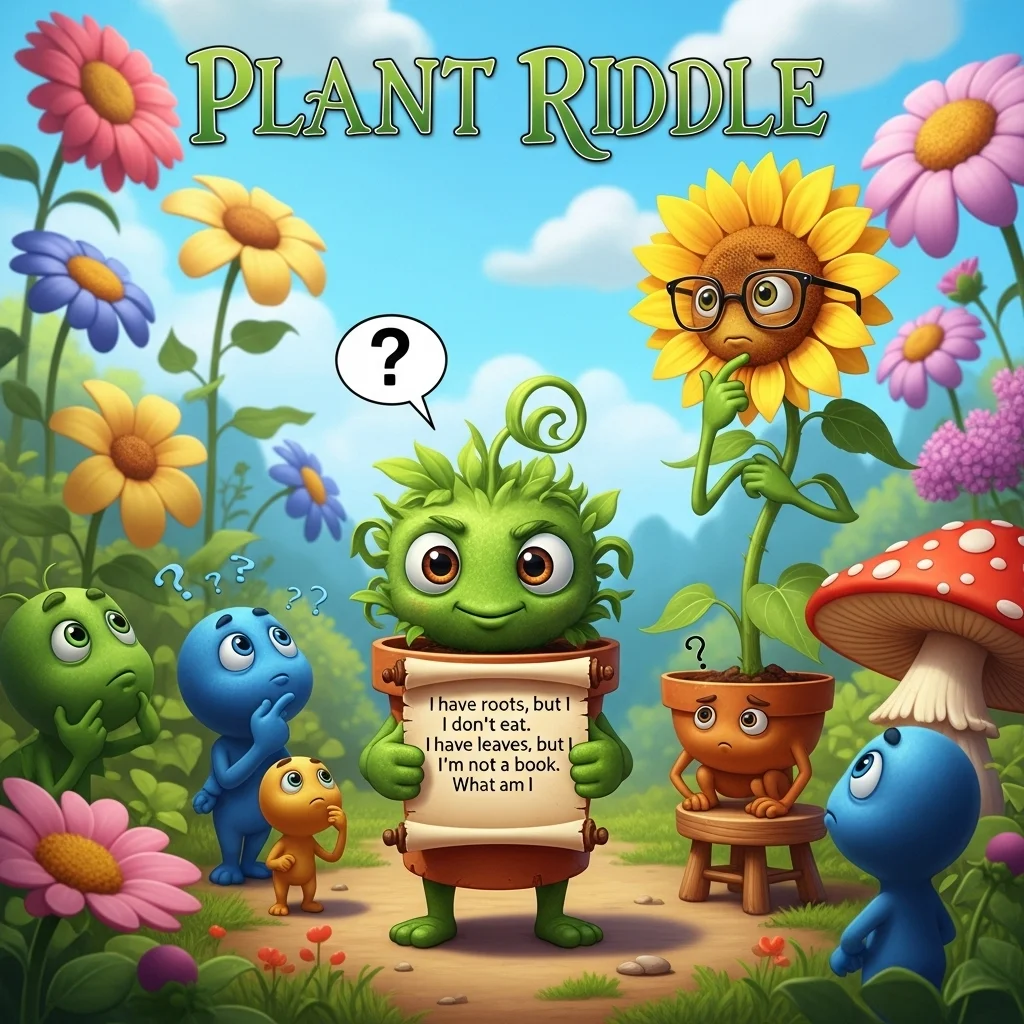
🌱 Easy Plant Riddles for Kids
What grows from a tiny seed 👉 Plant
What has leaves but isn’t a book 👉 Tree
What blooms in gardens 👉 Flower
What green friend cleans air 👉 Plant
What grows in soil 👉 Plant
What follows the sun 👉 Sunflower
What is eaten in salads 👉 Lettuce
What climbs walls 👉 Vine
What smells sweet 👉 Flower
What decorates homes 👉 Plant
🌻 Flower Riddles Full of Color
What opens petals in morning 👉 Flower
What bees visit happily 👉 Flower
What smells like spring 👉 Flower
What grows from a bud 👉 Flower
What colors gardens 👉 Flower
What attracts butterflies 👉 Flower
What sits on stems 👉 Flower
What turns towards the sun 👉 Sunflower
What blooms for beauty 👉 Flower
What grows in bunches 👉 Flower
🌳 Tree Riddles That Stand Tall
What grows leaves every spring 👉 Tree
What has bark but no bite 👉 Tree
What gives shade in summer 👉 Tree
What grows rings yearly 👉 Tree
What holds fruits 👉 Tree
What stands for years 👉 Tree
What roots deep in soil 👉 Tree
What provides homes for birds 👉 Tree
What loses leaves in autumn 👉 Tree
What grows from acorns 👉 Oak
🥬 Vegetable & Edible Plant Riddles
What is crunchy and green 👉 Lettuce
What grows underground 👉 Carrot
What is long and orange 👉 Carrot
What grows in pods 👉 Pea
What can be red, yellow, or green 👉 Bell pepper
What has layers like an onion 👉 Onion
What is leafy and tasty 👉 Spinach
What grows on vines 👉 Tomato
What is round and juicy 👉 Tomato
What is eaten cooked or raw 👉 Vegetable
🌾 Plant Growth and Nature Riddles
What starts as a tiny seed 👉 Plant
What needs sunlight to grow 👉 Plant
What drinks water but has no mouth 👉 Plant
What grows roots unseen 👉 Plant
What reaches for the sky 👉 Tree
What blooms with care 👉 Flower
What grows taller each year 👉 Plant
What lives in soil 👉 Plant
What follows the seasons 👉 Plant
What makes oxygen 👉 Plant
🌸 Fun Flower-Themed Riddles
What blooms in the springtime 👉 Tulip
What loves rain 👉 Daisy
What opens with the sun 👉 Morning glory
What has petals and a stem 👉 Rose
What attracts bees 👉 Lavender
What is red and fragrant 👉 Rose
What blooms in wild fields 👉 Dandelion
What grows in pots 👉 Marigold
What decorates gardens 👉 Sunflower
What is yellow and tall 👉 Sunflower
🧑🌾 Gardening Riddles
What digs holes for seeds 👉 Shovel
What waters plants 👉 Watering can
What protects from weeds 👉 Mulch
What grows flowers 👉 Garden
What grows vegetables 👉 Garden
What keeps pests away 👉 Fence
What blooms with care 👉 Garden
What soil nourishes 👉 Compost
What gardeners love 👉 Plants
What needs sunlight and water 👉 Plants
🌍 Plant Science Riddles
What makes plants green 👉 Chlorophyll
What carries water 👉 Xylem
What carries food 👉 Phloem
What produces seeds 👉 Flower
What photosynthesizes 👉 Leaf
What grows underground 👉 Root
What protects the plant 👉 Stem
What blooms in colors 👉 Petal
What attracts pollinators 👉 Flower
What grows year after year 👉 Plant