Language is more than words on a page. Itβs sound, rhythm, curiosity, and confidence. For English learners, every new word feels like a small victoryβand ESL riddles turn those victories into fun moments of discovery. A riddle invites learners to pause, think, smile, and use English instead of memorizing it.
π‘ Did You Know?
Solving riddles helps ESL learners improve vocabulary, inference skills, and speaking confidence.
Simple word puzzles activate both language and problem-solving areas of the brain, making learning stick longer.
π― Riddle of the Day
I have words but never speak,
I help you learn each day of the week.
Can you guess the answer? Comment below!

π ESL riddles with answers
- What has a face and two hands but no arms or legs? β A clock
- What has keys but canβt open locks? β A piano
- What gets wetter the more it dries? β A towel
- What has a neck but no head? β A bottle
- What can travel around the world while staying in a corner? β A stamp
- What has a bed but never sleeps? β A river
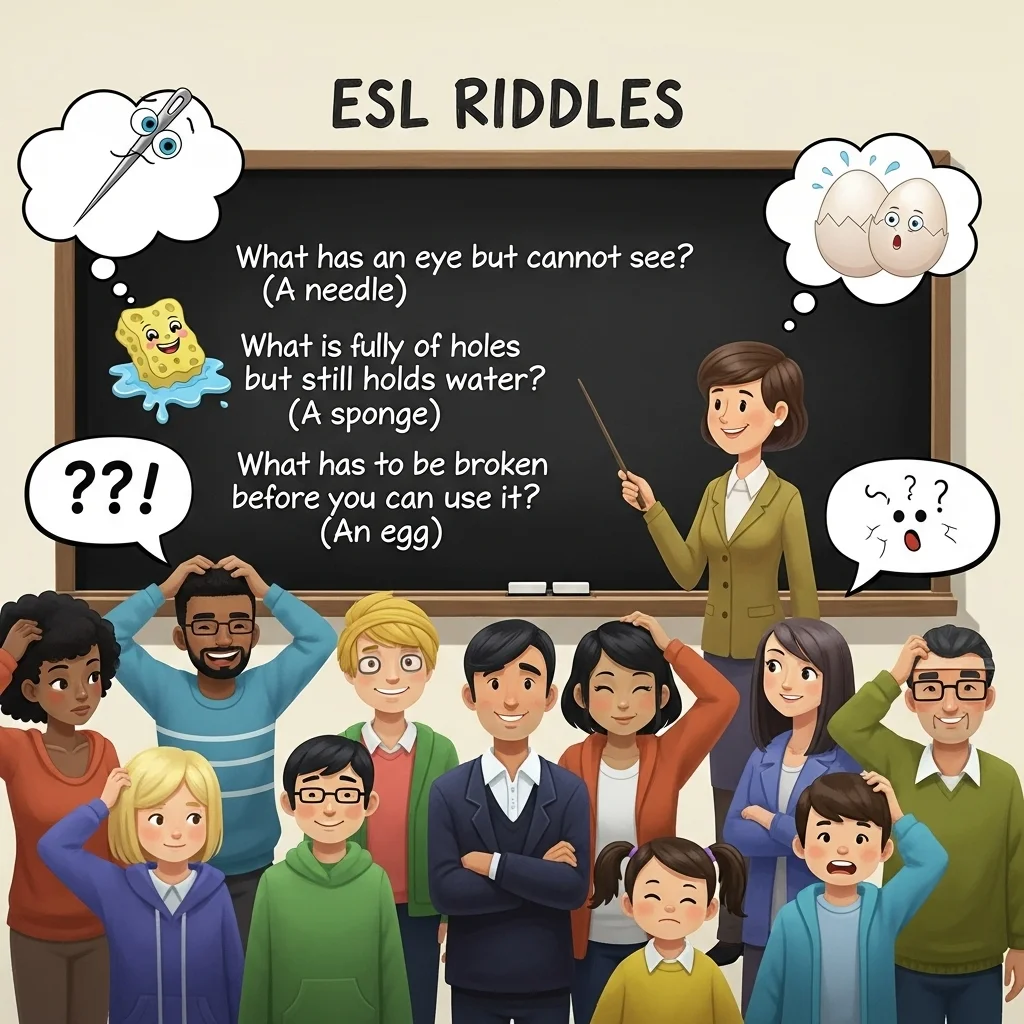
- What has one eye but cannot see? β A needle
- What has words but never speaks? β A book
- What comes down but never goes up? β Rain
- What has a ring but no finger? β A telephone
π§ ESL riddles for kids
- What animal says βmooβ? β A cow
- What color is the sky on a sunny day? β Blue
- What do you use to write on paper? β A pen or pencil
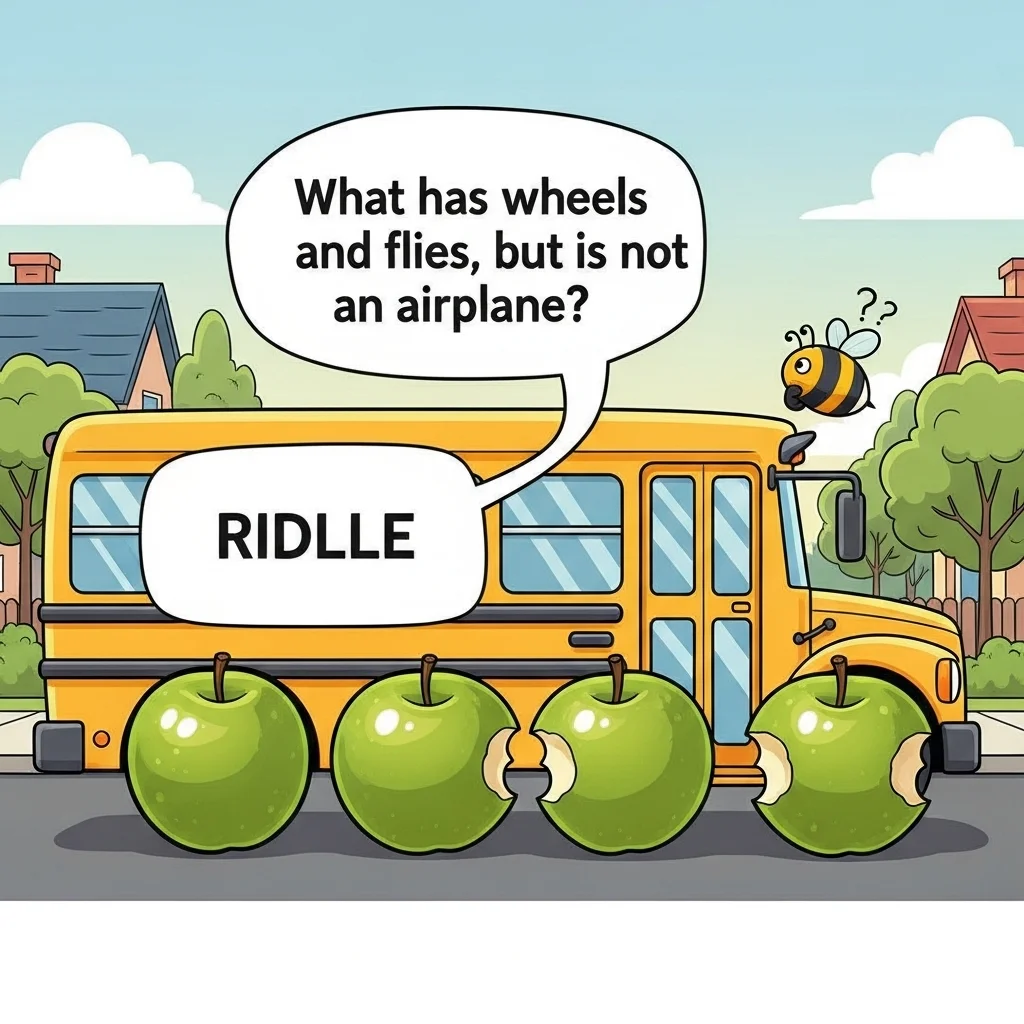
- What flies but is not a bird? β An airplane
- What do you wear on your feet? β Shoes
- What animal has stripes and says βneighβ? β A zebra (trick question!)
- What is round, yellow, and hot in the sky? β The sun
- What do you drink when you are thirsty? β Water
- What do you sleep on? β A bed
- What has wheels and takes you to school? β A bus
π ESL riddles for adults
- What runs but never walks? β A river
- What has many teeth but cannot bite? β A comb
- What gets bigger the more you take away from it? β A hole
- What has an endless supply of letters but starts empty? β A mailbox
- What breaks without being held? β A promise
- What can fill a room but takes up no space? β Light
- What goes up but never comes down? β Your age
- What has a thumb and four fingers but is not alive? β A glove
- What can you catch but not throw? β A cold
- What has a heart that doesnβt beat? β An artichoke
π ESL riddles PDF
- What has pages but is not a tree? β A book
- What can you download but cannot touch? β A file
- What do students use to study vocabulary? β Flashcards
- What opens and closes but is not a door? β A PDF file (hint: document)
- What helps you read on a computer? β A screen
- What is printed but never speaks? β A worksheet
- What carries information but is not alive? β A document
- What can be shared instantly worldwide? β A PDF
- What has text but no voice? β An ebook
- What is used for learning on devices? β A digital file
π’ 100 easy riddles with answers
- What has four legs but cannot walk? β A table
- What has a bark but no bite? β A tree
- What is full of holes but still holds water? β A sponge
- What goes up and down but never moves? β A staircase
- What has hands but cannot clap? β A clock
- What is always in front of you but canβt be seen? β The future
- What has a tail and head but no body? β A coin
- What gets sharper the more you use it? β A brain
- What has cities but no houses? β A map
- What can be cracked, made, told, and played? β A joke
π 1000 riddles with answers
- What starts with T, ends with T, and has tea inside? β A teapot
- What can speak many languages but has no mouth? β A book
- What is always coming but never arrives? β Tomorrow
- What has a bottom at the top? β Your legs
- What can run but never walks? β A clock
- What has no life but can grow? β A crystal
- What can you hold without touching it? β Your breath
- What has a head and a tail but no body? β A coin
- What belongs to you but others use it more? β Your name
- What has no beginning, middle, or end? β A circle
βοΈ Easy ESL riddles
- What color is grass? β Green
- What do you use to cut paper? β Scissors
- What do you see at night in the sky? β Stars
- What do you use to open a door? β A key
- What do you eat in the morning? β Breakfast
- What animal says βwoofβ? β A dog
- What do you wear on your head? β A hat
- What do you sit on at school? β A chair
- What is cold and falls in winter? β Snow
- What do you use to drink soup? β A spoon
π Language riddles with answers
- What gets stronger the more languages it knows? β The brain
- What speaks without a mouth? β A sign
- What translates words but has no voice? β A dictionary
- What connects people across countries? β Language
- What can you write but cannot speak? β Text
- What has grammar but no feelings? β A sentence
- What can change meaning with just one word? β A phrase
- What helps you understand new cultures? β Language learning
- What is spoken everywhere but sounds different? β Human language
- What grows when you learn more? β Vocabulary
π§ ESL Riddles for Beginners
I say hello without hands π hi
I shine in the sky π sun
I fall from clouds π rain
I open and close π door
I show time π clock
π£οΈ Everyday English Riddles
I ring but Iβm not a bell π phone
I hold food π plate
I clean your teeth π toothbrush
I carry books π bag
I light the room π lamp
π« Classroom ESL Riddles
I write but have no voice π pen
I erase mistakes π eraser
I hold pages π book
I help you learn π teacher
I sit quietly π desk
π Home Vocabulary ESL Riddles
I keep food cold π fridge
I help you sleep π bed
I cook meals π stove
I open for guests π door
I watch shows π TV
π ESL Riddles About Places
I have books and silence π library
I sell food π market
I heal people π hospital
I teach students π school
I show movies π cinema
π¨βπ©βπ§ ESL Family Riddles
I am your motherβs son π brother
I help raise you π parent
I play with you π friend
I visit holidays π family
I love you always π mom
π Food ESL Riddles
I am red and sweet π apple
I am hot to drink π tea
I am round and cheesy π pizza
I am cold and sweet π ice cream
I grow on trees π fruit
πΆ Animal ESL Riddles
I bark π dog
I meow π cat
I fly at night π owl
I give milk π cow
I hop π rabbit
π¦οΈ Weather ESL Riddles
I make you wet π rain
I cover the sky π clouds
I shine all day π sun
I feel very cold π snow
I move air π wind

β° Time & Routine ESL Riddles
I wake you up π alarm
I tell the hour π clock
I end the day π night
I start work π morning
I come after today π tomorrow
π Clothes ESL Riddles
I keep you warm π jacket
I cover your feet π shoes
I protect from rain π coat
I sit on your head π hat
I hold pants π belt
π§ Easy Thinking ESL Riddles
I go up but never down π age
I have keys but no doors π piano
I run but never walk π water
I have a face and hands π clock
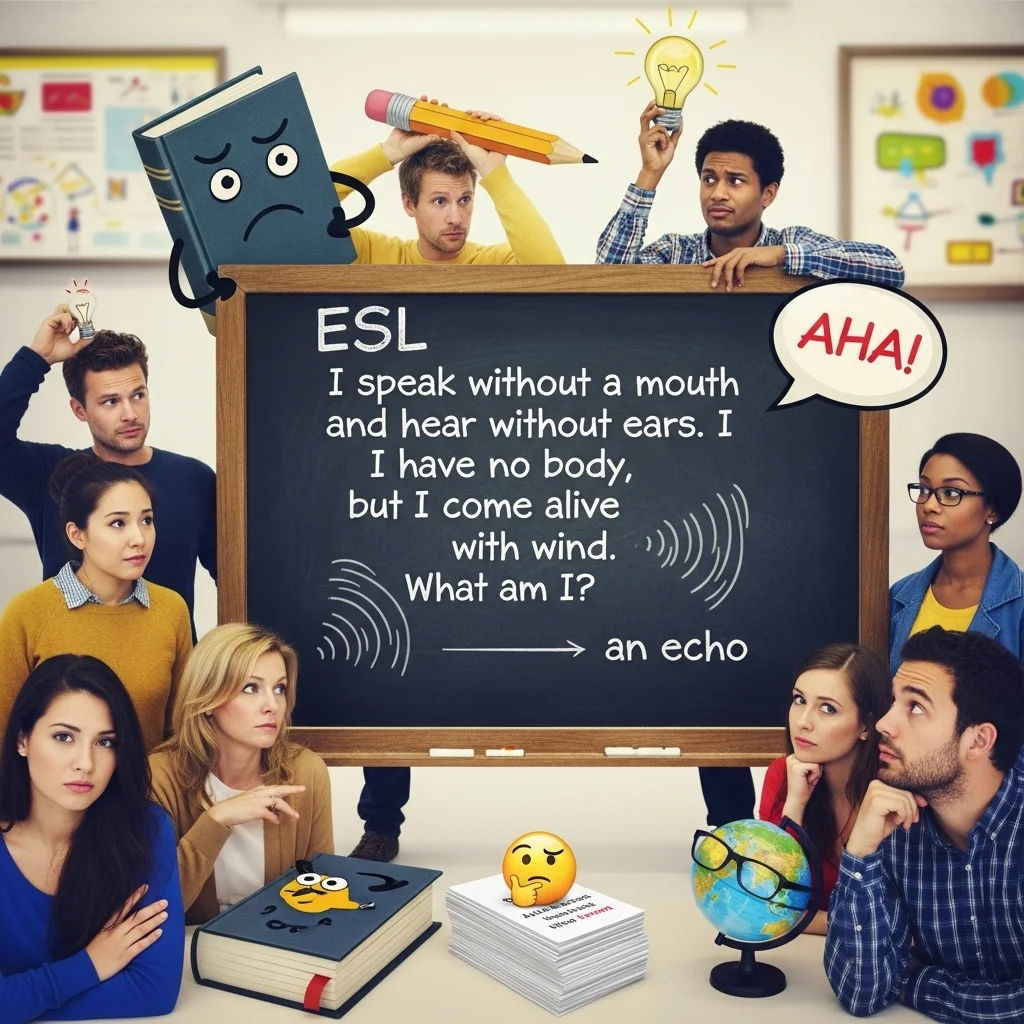
I speak without a mouth π echo
π School Life ESL Riddles
I carry homework π backpack
I ring for class π bell
I give grades π test
I ask questions π teacher
I answer them π student
π Transport ESL Riddles
I drive on roads π car
I fly in the sky π airplane
I stop at stations π train
I carry many people π bus
I move on water π boat
π Fun & Friendly ESL Riddles
I make you laugh π joke
I show happiness π smile
I feel good π happy
I share fun π game
I bring joy π fun
π§© ESL Logic Riddles
I am full but eat nothing π brain
I disappear when spoken π silence
I have a neck but no head π bottle
I have pages but no story π notebook

π ESL Color & Shape Riddles
I am red like fire π red
I am round π circle
I have four sides π square
I shine bright π yellow
I look like the sky π blue
β Frequently Asked Questions
What are ESL riddles?
ESL riddles are simple word puzzles designed to help English learners practice vocabulary and thinking skills.
Who can use ESL riddles?
They are perfect for kids, teens, adults, teachers, tutors, and beginner to intermediate English learners.
Are ESL riddles good for classrooms?
Yes, they work well as warm-ups, brain breaks, speaking activities, and confidence builders.
Do ESL riddles help improve English?
Yes, they improve vocabulary, comprehension, listening, and speaking in a fun way.
Why are ESL riddles popular in 2026?
They match modern learning styles by being short, engaging, and stress-free for learners worldwide.
Conclusion
ESL riddles turn language learning into a friendly conversation instead of a difficult task. They invite learners to think, guess, smile, and grow more confident with every answer. Small riddles create big moments of understanding, and those moments stay in the mind far longer than drills or lists.